

Saturday morning. No alarm. No appointments. No particular reason to get out of bed.
After a busy week, you decide to give yourself the luxury of sleeping as long as you want. Instead of your usual seven hours, you manage nine or even ten.
You should feel fantastic.
Instead, your head feels heavy, your thinking is sluggish, and making a cup of coffee seems like a surprisingly complicated project.
Meanwhile, there are mornings when you’ve slept considerably less and practically bounced out of bed.
What exactly is going on here?
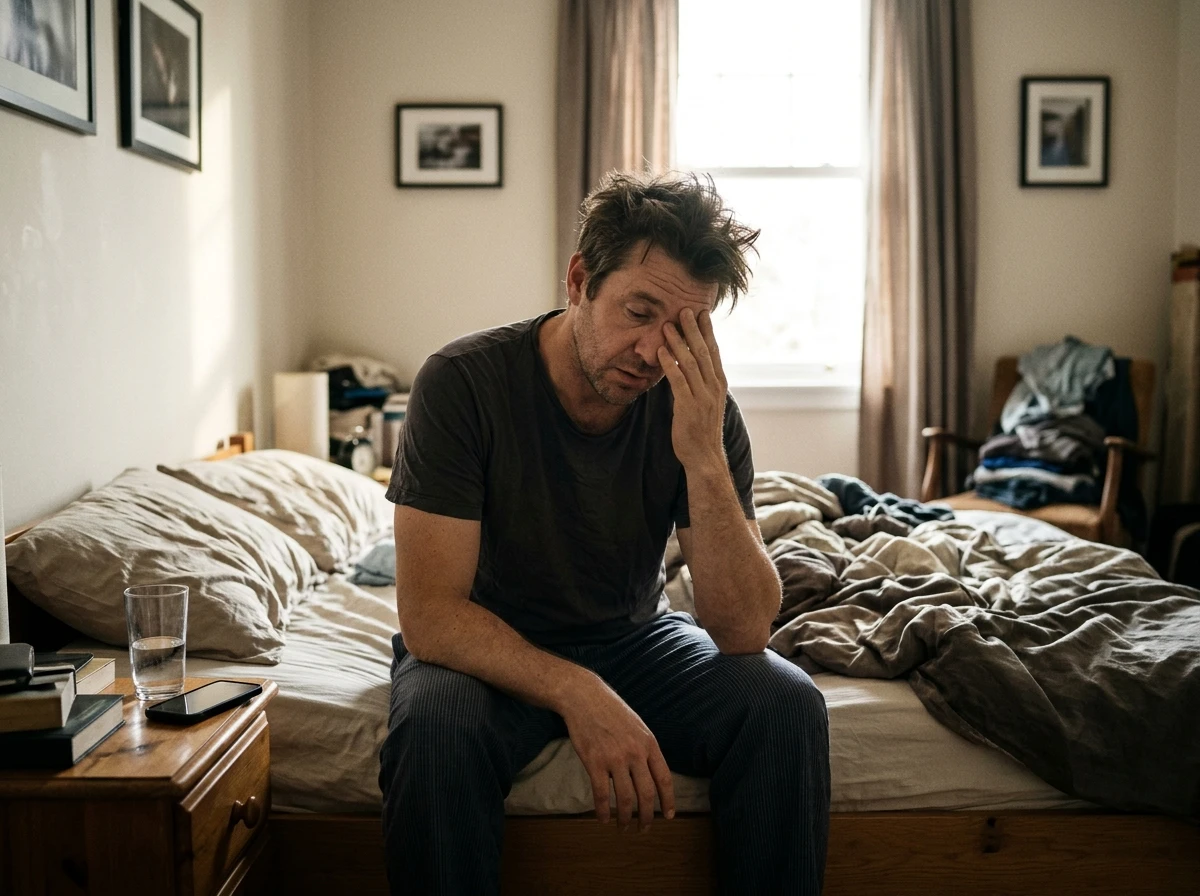
One of the more fascinating things about sleep is that the relationship between how long we sleep and how refreshed we feel isn’t nearly as straightforward as we might expect.
Your brain doesn’t operate like a rechargeable battery that simply reaches a higher percentage the longer you leave it plugged in. Sleep is a dynamic biological process involving changing brain activity, hormonal signals, internal clocks, and different stages of consciousness.
And sometimes, the extra sleep you thought would make you feel better coincides with biological conditions that make waking up feel considerably worse.
Understanding why can change the way you think about a good night’s sleep.
Waking Up Is a Biological Process, Not an On-Off Switch
We tend to think of ourselves as being either asleep or awake.
Your brain sees things a little differently.
When you first open your eyes in the morning, not every aspect of brain function immediately returns to its normal waking state. Attention, reaction time, decision-making, and alertness can all take time to recover.
This transitional state is known as sleep inertia.
It’s the scientific name for that peculiar period when you’re technically awake but don’t feel entirely operational.
You might recognize it as the experience of reading the same sentence three times, forgetting why you walked into the kitchen, or having a conversation that you barely remember later.
Research suggests that different brain regions recover from sleep at different rates. The systems involved in higher-level thinking and executive function may take longer to become fully active than those responsible for more basic functions.
In other words, you can be awake enough to walk around while still being surprisingly unprepared to make important decisions.
Sleep inertia often improves substantially within the first 15 to 30 minutes after waking, although its effects can persist much longer under certain circumstances.
And here’s where things get interesting.
The intensity of sleep inertia isn’t determined simply by the number of hours you’ve slept.
It can also be influenced by your previous sleep history, the biological time at which you awaken, and the characteristics of the sleep from which you’re emerging.
The Timing of Your Awakening Can Change Everything
Throughout the night, your brain moves through different stages of sleep, including lighter non-REM sleep, deep non-REM sleep, and REM sleep.
These stages serve different biological functions, and their distribution changes throughout the night.
Deep sleep tends to be more concentrated during the earlier portion of a typical night’s sleep, while REM sleep generally becomes more prominent toward morning.
However, sleep doesn’t follow a perfectly predictable schedule.
Your sleep cycles vary in length. Brief awakenings occur. Previous sleep deprivation can alter your sleep architecture. Illness, medications, alcohol, and numerous other factors can influence what happens during the night.
Waking from deep sleep can sometimes produce more pronounced sleep inertia, although the relationship between sleep stage and morning grogginess is more complicated than it’s often presented.
This is one reason why I’m cautious about the popular advice to schedule your alarm around exact 90-minute sleep cycles.
The idea sounds wonderfully convenient. Unfortunately, your brain hasn’t agreed to operate according to a spreadsheet.
Sleeping an additional hour doesn’t guarantee that you’ll awaken at a more favorable point in your sleep architecture. You might feel better, worse, or essentially the same.
And feeling particularly groggy when you awaken doesn’t necessarily mean the sleep you just experienced was poor or unhelpful.
It may simply mean that your transition out of it is taking a little longer.
Your Body Has a Clock That Doesn’t Care What Day It Is
Imagine that you normally wake up at 6:30 a.m. during the workweek.
On Saturday, you stay up later than usual and sleep until 10 a.m.
From your perspective, you’re enjoying the weekend.
From the perspective of your internal biological clock, your schedule has suddenly shifted by several hours.
Your circadian rhythm helps regulate when your body promotes sleep, when it promotes wakefulness, and when various physiological processes occur throughout the day and night.
Body temperature, melatonin secretion, cortisol rhythms, digestion, and cognitive performance all have relationships with this internal timing system.
When your sleeping schedule changes substantially between workdays and free days, researchers sometimes refer to the resulting mismatch as social jet lag.
It’s a little like traveling across time zones without leaving your house.
Sleeping later isn’t inherently bad. In fact, if you’ve accumulated a sleep deficit during the week, additional sleep may be genuinely beneficial.
The complication is that sleep duration and sleep timing are two different variables.
A later wake time may also change when you receive morning light, eat breakfast, exercise, and engage in other activities that help organize your daily biological rhythms.
And if your bedtime shifts later along with your wake time, you may be reinforcing a schedule that makes returning to your usual routine more difficult.
Circadian timing also directly influences sleep inertia. Waking during your biological night, when your internal clock is still strongly promoting sleep, can produce particularly pronounced grogginess.
The important distinction is that the time displayed on your alarm clock doesn’t necessarily tell you what time it is inside your body.
Four Reasons More Sleep Doesn’t Always Feel Like Better Sleep
It helps to think of morning alertness as the result of several overlapping biological processes rather than a simple measurement of how long you spent in bed.
Four possible explanations for the same groggy morning.
Select a scenario to explore how morning alertness might be affected.
You wake feeling foggy, but your alertness gradually improves as your brain transitions into wakefulness.
You generally feel fine once your morning gets underway.
A helpful next step
Allow yourself time to become fully alert before demanding or safety-sensitive activities.
These patterns can overlap and are not diagnostic. Persistent unrefreshing sleep or excessive daytime sleepiness deserves professional evaluation.
The same feeling of exhaustion can emerge from very different circumstances.
Someone recovering from several nights of insufficient sleep may need more sleep. Someone experiencing substantial sleep fragmentation may need better-quality sleep. Someone with an irregular schedule may benefit from more consistent timing.
And someone experiencing ordinary sleep inertia may simply need a little time to wake up.
Treating all four situations by spending fewer hours in bed could be exactly the wrong approach.
Ten Hours in Bed Isn’t Necessarily Ten Hours of Restorative Sleep
Here’s a question worth considering:
When you say you slept for ten hours, do you actually know that you slept for ten hours?
Most of us estimate our sleep duration by calculating the time between going to bed and getting up.
But time in bed and time asleep aren’t the same thing.
You may have taken 30 minutes to fall asleep, awakened several times during the night, or spent the last hour drifting in and out of sleep.
There can also be brief disruptions in sleep that you don’t consciously remember.
This is known as sleep fragmentation, and it can interfere with the continuity and restorative qualities of sleep.
Imagine trying to watch a two-hour movie that keeps getting interrupted every few minutes. You might spend three hours watching it and still feel as though you never fully experienced the story.
Sleep can work in a somewhat similar way.
Repeated disruptions can interfere with the normal progression of sleep, even when the total amount of time spent in bed appears generous.
Potential contributors include:
- Obstructive sleep apnea and other sleep-related breathing disorders.
- Alcohol consumption, particularly later in the evening.
- Pain, discomfort, or frequent trips to the bathroom.
- Environmental disturbances such as noise or uncomfortable temperatures.
- Certain medications and sleep-related movement disorders.
Obstructive sleep apnea is particularly worth mentioning because a person can experience repeated breathing-related disruptions without remembering them the following morning.
They may believe they’ve slept soundly for nine hours while their sleep has actually been interrupted throughout the night.
If you regularly sleep for an adequate amount of time but still feel unrefreshed, the continuity and quality of your sleep deserve attention.
Sometimes Sleeping Longer Is a Symptom, Not the Cause
There’s another possibility that can easily get overlooked.
Perhaps sleeping longer isn’t what made you feel tired.
Perhaps whatever made you tired also caused you to sleep longer.
This distinction matters enormously.
After several nights of insufficient sleep, your body may increase its drive for sleep. You might sleep longer than usual when given the opportunity, yet still experience residual fatigue or impaired alertness.
One extended night of sleep doesn’t necessarily reverse the effects of an entire week of sleep restriction.
Similarly, illness, depression, certain medications, and various medical conditions can contribute to fatigue, increased sleepiness, or changes in sleep duration.
Studies have identified associations between unusually long habitual sleep duration and certain adverse health outcomes. But those associations don’t establish that sleeping longer directly causes those outcomes.
Underlying health conditions and other factors may help explain why some people both sleep longer and experience poorer health.
For healthy adults, regularly obtaining at least seven hours of sleep is generally recommended. Some people naturally need more, and sleeping beyond nine hours may be appropriate during periods of recovery from sleep deprivation or illness, as well as for some young adults.
The goal isn’t to train yourself to need less sleep.
It’s to understand what your sleep is telling you.
Are You Tired, Sleepy, or Simply Not Fully Awake?
These three experiences can feel similar, but distinguishing between them can reveal useful information.
Sleep inertia is primarily associated with the transition from sleep to wakefulness. You feel sluggish or mentally foggy immediately after waking, but your alertness generally improves as the morning progresses.
Sleepiness is the tendency to fall asleep. You might struggle to keep your eyes open while reading, watching television, attending a meeting, or sitting quietly.
Fatigue is more closely associated with a lack of physical or mental energy. You may feel exhausted without necessarily being able to fall asleep.
These experiences can overlap, but they’re not interchangeable.
If you wake up feeling terrible after nine hours of sleep but feel perfectly fine by the time you’ve showered, eaten breakfast, and started your day, ordinary sleep inertia may be a reasonable explanation.
If you’re still struggling to stay awake at lunchtime, despite consistently allowing yourself enough time to sleep, that’s a different situation.
The duration of your grogginess may tell you more than its intensity during the first few minutes of the morning.
Try a Seven-Day Morning Alertness Experiment
Rather than immediately deciding that you sleep too much, try becoming a curious observer of your own sleep.
For seven days, maintain a reasonably consistent wake time while allowing yourself sufficient opportunity to sleep. Don’t deliberately restrict your sleep to conduct this experiment.
Each morning, record a few simple observations:
- Your approximate bedtime and wake time.
- Any nighttime awakenings you remember.
- How alert you feel immediately after waking.
- How alert you feel 30 minutes and 60 minutes later.
- Whether you experience significant sleepiness or fatigue during the afternoon.
You can use a simple scale from 1 to 10 to rate your alertness.
During the experiment, try to get some natural outdoor light after waking, maintain relatively consistent caffeine habits, and note anything unusual that might have affected your sleep.
Morning light can support alertness and help reinforce circadian timing, although it isn’t an instant cure for sleep inertia.
If you use a wearable sleep tracker, its estimates may provide additional context. Just remember that consumer devices cannot reliably identify every sleep stage or diagnose the underlying causes of unrefreshing sleep.
At the end of the week, look for patterns.
Do you feel worse primarily when your schedule changes? Does your grogginess disappear relatively quickly? Do longer nights follow particularly exhausting days? Are you consistently tired regardless of how much sleep you get?
You’re not trying to diagnose yourself.
You’re collecting better information about a process that occupies roughly a third of your life.
When Morning Grogginess Deserves More Attention
Occasionally feeling groggy after a long night’s sleep is generally not a reason for concern.
However, certain recurring patterns are worth discussing with a healthcare professional.
These include regularly waking unrefreshed despite adequate sleep opportunity, experiencing prolonged difficulty becoming fully awake, struggling with excessive daytime sleepiness, or needing unusually long periods of sleep without feeling restored.
Loud snoring, witnessed pauses in breathing, gasping during sleep, and recurring morning headaches can also warrant evaluation for a sleep-related breathing disorder.
In some sleep disorders, including idiopathic hypersomnia, unusually severe and prolonged sleep inertia can be a prominent feature. It’s sometimes described as sleep drunkenness.
That doesn’t mean everyone who struggles to get out of bed has a sleep disorder. It simply illustrates why persistent or disruptive symptoms shouldn’t automatically be dismissed as laziness or a lack of motivation.
And if you’re sleepy enough that driving feels difficult, don’t drive until you’re adequately alert. Excessive sleepiness behind the wheel is a serious safety concern.
Perhaps You’re Measuring Your Sleep Too Early
There’s something curious about the way we evaluate a night’s sleep.
We spend seven, eight, or nine hours asleep and then often decide whether the entire experience was successful based on how we feel during the first 30 seconds after opening our eyes.
That’s a remarkably small window through which to judge such a complex biological process.
Imagine evaluating the quality of your entire day based on how you feel during the first minute of your morning.
You’d probably draw some fairly inaccurate conclusions.
The same principle applies to sleep.
Pay attention to how you feel throughout the day. Notice how consistently you can concentrate, maintain your energy, regulate your emotions, and remain alert without struggling to stay awake.
Give your brain some time to complete the transition into wakefulness.
And remember that sleeping longer isn’t necessarily the problem, just as sleeping longer isn’t necessarily the solution.
Good sleep isn’t simply about accumulating hours.
It’s about getting the sleep your body needs, at a time that works with your biology, with enough continuity to allow its remarkable restorative processes to unfold.
Sometimes, the most useful thing you can do after a good night’s sleep is give yourself a little time to finish waking up.

Stone Evans, Founder of SleepCoaching.com
Stone Evans is the founder of SleepCoaching.com which has become one of the most popular destinations online for people seeking better sleep. Stone started developing this website after realizing his own sleep struggles and then beginning an intensive period of study (which included professional sleep coach training) and ongoing lifestyle changes to improve and optimize his sleep.
Now through in-depth articles from sleep experts around the world, the internet's leading and most comprehensive sleep coaching directory, quantitative sleep product reviews and Stone's personal daily sleep tracking journey, visitors to our website regularly report gaining information and insights that are helping them achieve better health, better sleep and a better quality of life.

