

Mouth taping for sleep has become one of the more unusual trends in the pursuit of better rest.
The idea sounds simple: place a small piece of tape over your lips before bed, keep your mouth closed while you sleep, and encourage your body to breathe through your nose instead.
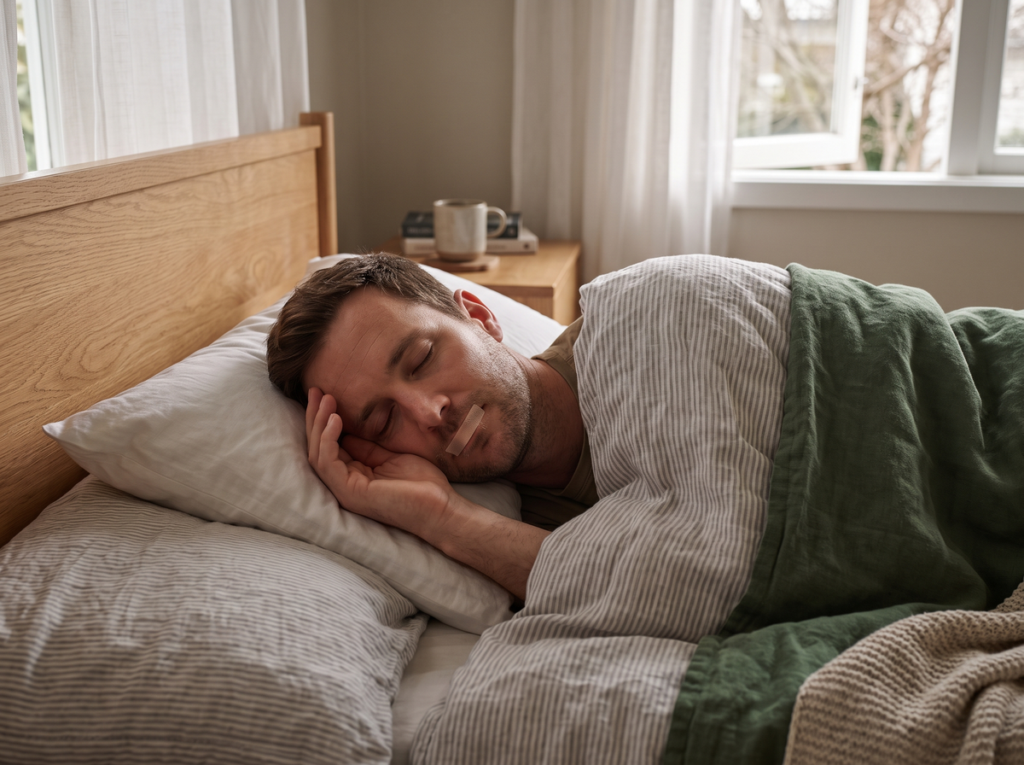
Supporters claim it can reduce snoring, prevent dry mouth, improve sleep quality, and even help you wake up feeling more refreshed. Social media has helped turn the practice into a popular sleep hack.
But closing your mouth and improving your breathing are not necessarily the same thing.
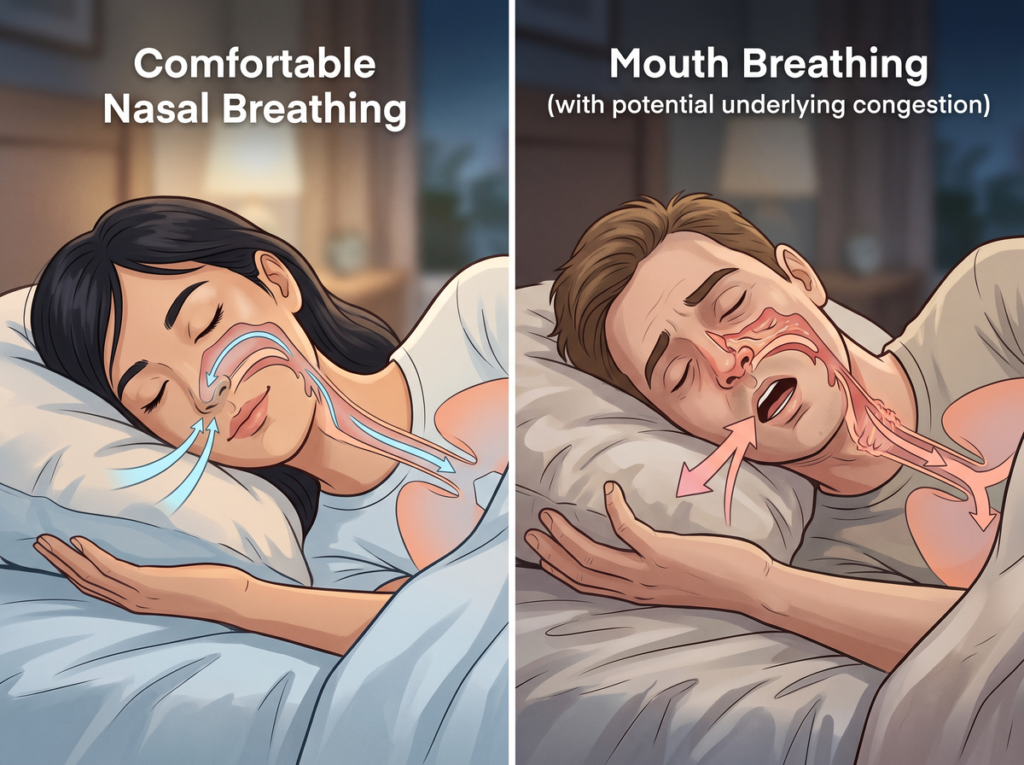
Mouth breathing during sleep can happen for many reasons. Nasal congestion, allergies, a deviated septum, other forms of nasal obstruction, and sleep-disordered breathing can all play a role. In some cases, breathing through the mouth may even be helping your body compensate for an airway that is difficult to breathe through.
That makes the most important question more complicated than whether mouth tape “works.”
Why are you breathing through your mouth in the first place?
Research into mouth taping is still limited. Some small studies have found promising results for particular groups of people, while newer research also suggests that preventing mouth breathing can make airflow worse for some sleepers.
So before reaching for the tape, it helps to understand what we actually know—and what we don’t.
Key Takeaways
- Mouth taping is intended to encourage nasal breathing by keeping the lips closed during sleep.
- Some small studies suggest it may reduce snoring and certain breathing events in carefully selected people, but the overall evidence remains limited.
- A 2025 systematic review found only 10 relevant studies involving 213 patients and raised concerns about indiscriminate use, particularly when nasal obstruction is present.
- Mouth breathing can be a symptom of congestion, allergies, structural nasal problems, or sleep apnea rather than simply a habit that needs to be stopped.
- Mouth taping is not an established treatment for obstructive sleep apnea.
- If you regularly snore loudly, gasp or choke during sleep, experience breathing pauses, or remain unusually sleepy during the day, investigating possible sleep-disordered breathing is more important than experimenting with tape.
Table of Contents
What Is Mouth Taping for Sleep?
Mouth taping involves placing an adhesive strip over or around the lips before going to sleep to discourage the mouth from opening during the night.
The theory is that keeping the lips together encourages breathing through the nose.
Normally, your nose does more than simply provide another path for air. It warms, humidifies, and filters the air you breathe before it reaches your lungs. These are legitimate advantages of nasal breathing.
Problems can arise, however, when the benefits of nasal breathing are treated as proof of the benefits of mouth taping.
They aren’t the same thing.
You can encourage healthy nasal breathing without physically restricting the mouth. More importantly, being able to breathe comfortably through your nose is different from forcing yourself to rely exclusively on it for several hours while unconscious.
That distinction is at the center of the mouth-taping debate.
Why Do People Mouth Breathe While Sleeping?
If you routinely wake with your mouth open, a dry throat, drool on your pillow, or complaints from a partner about snoring, you may be breathing through your mouth for part of the night.
The next question is why.
According to Cleveland Clinic, common causes of mouth breathing include nasal congestion, allergies, chronic sinusitis, a deviated septum, enlarged turbinates, nasal polyps, and other airway issues. Sleep apnea can also be associated with mouth breathing.
This is why mouth breathing should not automatically be viewed as a bad habit that needs to be physically prevented.
Sometimes it may be a clue.
If your nose cannot move enough air comfortably, your mouth provides another breathing route. Closing that route without understanding the underlying problem doesn’t necessarily fix the problem.
Why Has Mouth Taping Become So Popular?
Mouth taping fits perfectly into the modern sleep-hack culture.
It is inexpensive, simple, easy to demonstrate in a short video, and based on an appealing idea: make one small change tonight and potentially wake up feeling better tomorrow.
Common claims include:
- Less snoring
- Less dry mouth
- Better sleep quality
- Better oxygenation
- Improved oral health
- More restorative sleep
- Better breath
- Even a more defined jawline
The problem is that these claims don’t all have the same level of scientific support.
The fact that nasal breathing has physiological advantages does not mean every claimed benefit of taping the mouth has been demonstrated in clinical research. Claims about dramatically improving sleep, reshaping the jawline, or producing broad health improvements go well beyond what current mouth-taping studies can establish.
This is a useful principle for evaluating any trending sleep strategy: separate the plausible mechanism from the proven outcome.
Something can make biological sense without yet being proven to deliver meaningful benefits in the real world.
Does Mouth Taping for Sleep Actually Work?
The fairest answer right now is:
Possibly for some people and some specific outcomes, but the evidence isn’t strong enough to recommend mouth taping broadly.
A 2025 systematic review of mouth taping examined the available research in people with mouth breathing, sleep-disordered breathing, or obstructive sleep apnea. Researchers found only 10 eligible studies involving a total of 213 patients.
Some of the studies reported improvements in certain measures. Others did not. The reviewers concluded that the existing literature does not provide strong enough evidence to support the widespread use of mouth taping and specifically raised safety concerns for people with nasal obstruction.
That doesn’t mean mouth taping never helps.
It means the evidence is much more limited and conditional than social media testimonials can make it appear.
What About the Study Showing Less Snoring and Sleep Apnea?
One of the most frequently cited positive studies was a 2022 preliminary study of mouth taping and mild obstructive sleep apnea.
Researchers studied 20 mouth breathers with mild obstructive sleep apnea who were able to tolerate mouth sealing. After one week, median apnea-hypopnea index, or AHI, fell from 8.3 to 4.7 events per hour. The median snoring index also decreased by about 47%.
Those results are interesting and deserve further study.
But there are important limitations.
The study involved only 20 people. They had mild obstructive sleep apnea, met specific inclusion criteria, and were able to tolerate having their mouths sealed. It was also a preliminary study rather than a large randomized clinical trial establishing mouth tape as a standard sleep apnea treatment.
In other words, it provides a reason to keep researching—not a reason to assume everyone who snores should tape their mouth.
Mouth Taping and Sleep Apnea Require Extra Caution
This is where the conversation becomes especially important.
Obstructive sleep apnea occurs when the upper airway repeatedly becomes narrowed or blocked during sleep. Common symptoms of sleep apnea can include loud snoring, breathing that stops and starts, gasping for air, daytime sleepiness, fatigue, morning headaches, and dry mouth.
If those symptoms sound familiar, mouth taping should not become a substitute for determining what is happening to your breathing overnight.
Newer research helps explain why.
A 2024 nonrandomized clinical trial examining mouth closure and airflow during sleep involved 54 people with obstructive sleep apnea. Researchers investigated what happened to airflow when participants’ mouths were closed during sleep. On average, mouth closure improved airflow—but individual responses were very different.
For people with moderate amounts of mouth breathing, airflow generally improved.
But among participants with the highest levels of mouth breathing, closing the mouth actually reduced airflow. Researchers found that some of these individuals appeared to rely on oral breathing to bypass obstruction higher in the airway.
The goal should not simply be to keep your mouth closed. The goal is to breathe well while you sleep.
This distinction matters. For some people, mouth breathing may provide another route for air when airflow higher in the airway is restricted. Simply closing the mouth doesn’t tell you whether that underlying airway problem has improved.
That is one of the strongest reasons to avoid thinking of mouth tape as a universal solution for snoring or suspected sleep apnea.
Sleep apnea can also occur alongside insomnia, creating a condition known as COMISA. If you struggle with both breathing-related sleep problems and persistent insomnia, understanding effective treatment for sleep apnea and comorbid insomnia can help you see why addressing both conditions may be important.
What About Mouth Taping With CPAP?
There is an important distinction between using mouth tape as a do-it-yourself treatment for sleep apnea and studying mouth closure as an adjunct to an established treatment such as continuous positive airway pressure, or CPAP.
A 2025 randomized study of mouth tape during CPAP therapy followed 62 people with obstructive sleep apnea who experienced mouth breathing while using CPAP. Participants used CPAP with and without hypoallergenic mouth tape during separate 30-day periods.
Researchers reported better CPAP adherence during the mouth-taping period, including approximately 52 additional minutes of average CPAP use per day. Participants also reported improvements in measures including dry mouth, snoring, daytime sleepiness, and nighttime awakenings, although adverse effects were reported as well.
That’s encouraging research, but it should be interpreted in context.
These participants were already being treated for diagnosed sleep apnea with CPAP. The tape was being studied as an addition to therapy, not as a replacement for it.
If mouth leaks are interfering with CPAP, the appropriate solution may involve mask selection, humidification, a chin strap, pressure adjustments, or another approach recommended by a sleep professional. Mayo Clinic notes that full-face CPAP masks may be appropriate for some people who have nasal obstruction or continue to breathe through the mouth.
Mouth taping should not be viewed as a homemade substitute for effective sleep apnea treatment.
Can Mouth Taping Reduce Snoring?
This is probably the benefit with the most intuitive appeal.
If opening the mouth contributes to someone’s snoring, keeping it closed might reduce the noise. The small 2022 study discussed earlier did find a substantial reduction in its participants’ snoring index.
But snoring has many possible causes, and not all snoring originates from mouth breathing.
The more important concern is that loud or persistent snoring can sometimes be a sign of obstructive sleep apnea.
Reducing the sound of snoring is not necessarily the same as correcting the breathing problem responsible for it.
If snoring is frequent, loud, accompanied by choking or gasping, or associated with significant daytime sleepiness, getting the underlying issue evaluated is a better strategy than simply trying to make the snoring quieter.
Can Mouth Taping Help With Dry Mouth?
Potentially—but again, the cause matters.
Sleeping with your mouth open can allow moisture to evaporate from the mouth and throat. Mouth breathing is commonly associated with waking with a dry mouth.
If a person can comfortably breathe through their nose and simply tends to sleep with their lips open, keeping the lips closed could theoretically reduce some of that overnight dryness.
But persistent morning dry mouth shouldn’t automatically be treated as proof that you need mouth tape.
It can also occur alongside sleep apnea and other conditions. If your dry mouth is frequent or severe—especially when accompanied by loud snoring, gasping, unrefreshing sleep, or daytime sleepiness—it may be worth looking deeper.
The symptom is information.
Don’t be too quick to suppress it without asking what is causing it.
Is Mouth Taping for Sleep Safe?
There are currently no widely accepted clinical guidelines establishing mouth taping as a routine sleep treatment, and it is not appropriate for everyone.
Potential problems include:
- Difficulty breathing if nasal airflow becomes restricted
- Skin redness, irritation, or allergic reactions from adhesive
- Anxiety or panic from feeling that the mouth is restricted
- Disrupted sleep due to discomfort
- Problems when nasal congestion develops during the night
Cleveland Clinic outlines several risks and safety considerations for mouth taping, particularly for people with nasal obstruction, nasal congestion, chronic allergies, sinus infections, enlarged tonsils, or a deviated septum. The organization recommends discussing the practice with a healthcare professional before trying it.
The 2025 systematic review reached a similarly cautious conclusion, noting potential risk when mouth taping is used indiscriminately in people with nasal obstruction.
A Simple Rule Before Considering Mouth Tape
Ask yourself:
Can I breathe freely and comfortably through my nose?
Not just for several breaths while sitting upright.
Can you breathe comfortably through your nose when lying down? Does one side feel persistently blocked? Do allergies regularly congest you? Do you wake up needing to breathe through your mouth?
If nasal breathing already feels difficult while you’re awake, forcing exclusive nasal breathing for an entire night deserves caution rather than experimentation.
Who Should Be Especially Cautious About Mouth Taping?
Mouth taping is particularly worth discussing with a qualified healthcare professional before considering if you:
- Cannot comfortably breathe through your nose
- Regularly experience nasal congestion
- Have chronic allergies or sinus problems
- Have a known or suspected deviated septum or other nasal obstruction
- Snore loudly and frequently
- Wake choking or gasping
- Have witnessed pauses in breathing
- Experience unexplained excessive daytime sleepiness
- Have diagnosed or suspected sleep apnea
- Use CPAP and are trying to solve mouth leaks or dry mouth
- Experience anxiety or panic when breathing feels restricted
If you’re experiencing persistent sleep problems alongside these breathing concerns, learning about common sleep disorders and their symptoms can help you recognize when the issue may deserve professional evaluation.
Children should not be treated as smaller versions of adults in this discussion. Persistent mouth breathing or snoring in a child deserves professional evaluation rather than a DIY mouth-taping experiment.
Before You Tape Your Mouth, Ask a Better Question
Before considering mouth tape, these five questions can help you determine whether keeping your mouth closed is really the issue you need to solve.
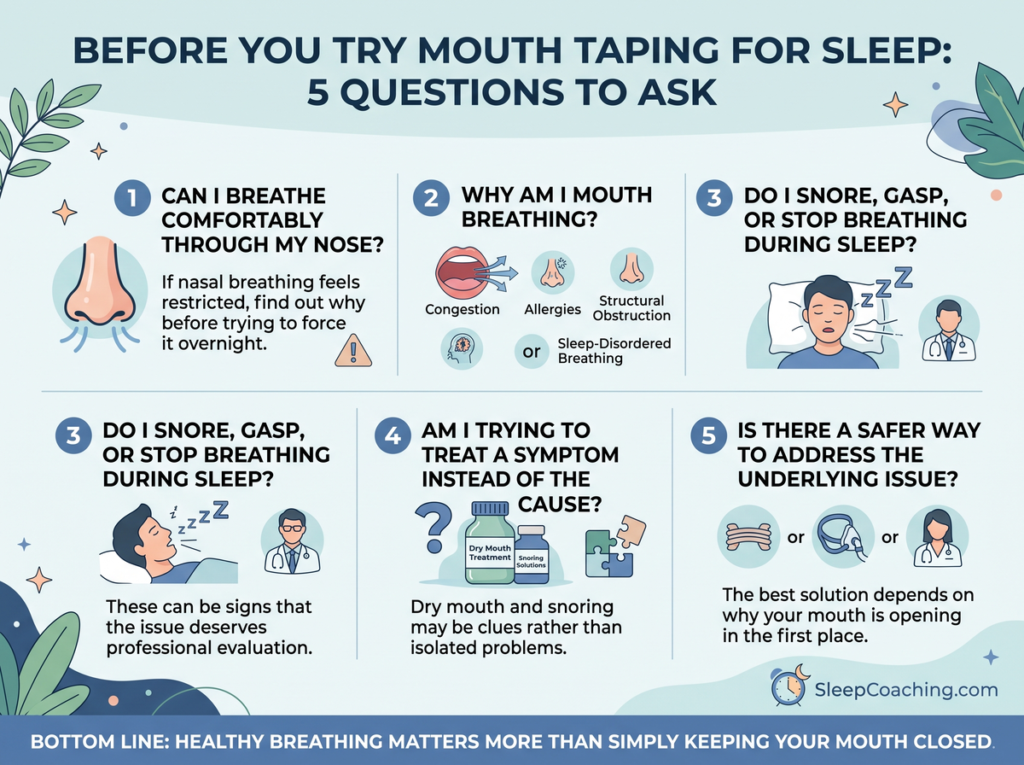
This is the most important practical takeaway from the entire discussion.
Instead of asking:
“How do I stop myself from mouth breathing?”
Start with:
“Why am I mouth breathing?”
That change in perspective can lead to much better decisions.
If the problem is temporary congestion from a cold, taping the mouth doesn’t remove the congestion.
If allergies are making nasal breathing difficult, addressing the allergies may be more useful.
If structural obstruction is limiting nasal airflow, forcing the mouth closed doesn’t correct the structure.
And if obstructive sleep apnea is contributing to nighttime mouth breathing, treating the sleep apnea matters far more than keeping the lips together.
Safer Ways to Support Better Nighttime Breathing
If your goal is easier nasal breathing or less snoring, the right strategy depends on the cause.
Some possibilities worth discussing with a healthcare professional include:
Address Nasal Congestion
If allergies, a cold, sinus problems, or another source of congestion is blocking your nose, treating the underlying cause can make nasal breathing easier without physically restricting your mouth.
Consider Nasal Strips or Dilators
For some people, external nasal strips or internal nasal dilators may help improve airflow through the nose without closing off the mouth as an alternate breathing route.
They won’t solve every type of obstruction or treat sleep apnea, but they approach the problem differently from mouth tape.
Change Your Sleep Position
Snoring and obstructive breathing can worsen when some people sleep on their backs. Side sleeping may reduce snoring for certain sleepers and is considerably simpler than forcing the mouth closed.
Investigate Persistent Snoring
If snoring happens night after night, particularly with gasping, choking, breathing pauses, or daytime sleepiness, consider talking with a healthcare provider about whether sleep apnea testing makes sense.
A home sleep apnea test or overnight sleep study may provide far more useful information than another sleep hack.
Optimize Existing CPAP Treatment
If you’re already using CPAP and mouth breathing or air leaks are causing problems, don’t assume you need tape. Different mask designs and other adjustments may improve treatment while preserving comfortable breathing.
Frequently Asked Questions
Does mouth taping improve sleep quality?
There isn’t enough high-quality research to conclude that mouth taping reliably improves sleep quality in the general population. Some small studies involving specific groups have reported improvements in measures such as snoring or sleep-disordered breathing, while the overall evidence remains limited.
Does mouth taping stop snoring?
It may reduce snoring for some people whose snoring is associated with mouth breathing, but it does not work for every cause of snoring. Persistent loud snoring can also be a symptom of obstructive sleep apnea and should not simply be covered up without considering the underlying cause.
Is mouth taping safe if I have sleep apnea?
Mouth taping should not be used as a DIY replacement for established sleep apnea treatment. Research shows that mouth closure can affect people with obstructive sleep apnea differently and can worsen airflow in some individuals. If you have diagnosed or suspected sleep apnea, discuss mouth taping with your healthcare provider or sleep specialist before considering it.
Can mouth taping help with dry mouth?
It may reduce dryness in some people when sleeping with an open mouth is the cause. However, frequent dry mouth can also accompany nasal obstruction or sleep apnea, so persistent symptoms deserve a closer look.
Can mouth taping improve your jawline?
There is not good clinical evidence showing that taping your mouth closed during sleep reshapes an adult jawline. Claims about dramatic facial changes should be treated separately from research into nighttime breathing.
What kind of tape should you use for mouth taping?
Because mouth taping is not an established sleep treatment with standardized clinical guidelines, there is no universally recommended taping protocol. If you’re considering it, discussing your breathing and individual risk factors with a healthcare professional is more important than choosing a particular brand of tape.
What should I do if I can’t breathe comfortably through my nose at night?
Don’t simply force your mouth closed. Nasal congestion, allergies, a deviated septum, nasal polyps, sinus problems, and other forms of obstruction can make nasal breathing difficult. Identifying and addressing the cause is a better starting point.
When should I talk to a doctor about nighttime mouth breathing?
Consider professional evaluation if mouth breathing is persistent, nasal breathing is difficult, or you experience loud snoring, gasping, choking, witnessed breathing pauses, significant daytime sleepiness, or consistently unrefreshing sleep. These symptoms may indicate an underlying breathing or sleep disorder that deserves attention.
Mouth Taping Isn’t a Shortcut to Better Sleep
It is understandable why mouth taping attracts attention.
People want to sleep better, and a simple strip of tape seems far easier than investigating allergies, nasal obstruction, snoring, sleep apnea, or the many other factors that can affect breathing at night.
For some carefully selected people who breathe comfortably through their noses, future research may establish useful applications for mouth taping. Early studies provide enough interesting results to justify continued investigation.
But we’re not there yet.
The current evidence is limited, individual responses can differ, and newer research suggests that closing the mouth can improve airflow in some sleepers while worsening it in others.
That’s why the most useful lesson from mouth taping may have very little to do with tape.
Pay attention to how you breathe while you sleep.
Waking with a dry mouth, regularly sleeping with your mouth open, persistent snoring, or struggling to breathe comfortably through your nose can all provide clues worth understanding.
Better sleep doesn’t come from blindly following—or automatically rejecting—the latest sleep trend.
It comes from understanding what your body is doing and choosing the solution that addresses the actual problem.
Don’t just ask whether mouth tape can keep your lips closed. Ask whether it helps you breathe—and sleep—better.

Stone Evans, Founder of SleepCoaching.com
Stone Evans is the founder of SleepCoaching.com which has become one of the most popular destinations online for people seeking better sleep. Stone started developing this website after realizing his own sleep struggles and then beginning an intensive period of study (which included professional sleep coach training) and ongoing lifestyle changes to improve and optimize his sleep.
Now through in-depth articles from sleep experts around the world, the internet's leading and most comprehensive sleep coaching directory, quantitative sleep product reviews and Stone's personal daily sleep tracking journey, visitors to our website regularly report gaining information and insights that are helping them achieve better health, better sleep and a better quality of life.

