

If you have chronic insomnia, you’ve probably experienced the frustrating cycle of lying awake in bed, trying harder and harder to fall asleep. The more you focus on sleeping, the more awake, alert, and frustrated you become. Over time, your brain can begin to associate your bed with wakefulness instead of sleep.

Stimulus control for insomnia is designed to break that cycle. One of the core techniques used in cognitive behavioral therapy for insomnia (CBT-I), it helps retrain your brain to reconnect your bed with sleepiness instead of worry, clock-watching, or mental effort. Rather than forcing sleep, stimulus control creates the conditions that allow sleep to happen more naturally over time.
Key Takeaways
- Stimulus control therapy retrains the bed to become a cue for sleepiness rather than wakefulness, worry, or frustration.
- Go to bed when sleepy, leave the bed when you become alert or frustrated, and return only when drowsiness comes back.
- Use the bed for sleep and intimacy, keep a consistent wake time, and avoid naps when possible to support sleep pressure.
- Progress may take several nights or weeks, so track patterns with a simple sleep diary instead of judging one difficult night.
- Stimulus control is a core part of CBT-I and may work best with professional guidance when insomnia is chronic or other health conditions are present.
How Stimulus Control for Insomnia Retrains Your Brain for Sleep
Your brain learns through repetition. When you regularly lie awake in bed feeling alert, frustrated, or anxious, it can begin to associate your bed with wakefulness instead of sleep. Sleep specialists call this learned response conditioned arousal.
That’s why you might feel sleepy while watching television on the sofa, only to become wide awake after getting into bed. You’re not doing anything wrong. Your brain has simply learned to connect the bed with effort, worry, and alertness rather than rest.
Stimulus control for insomnia is designed to reverse that pattern. The goal is straightforward: go to bed only when you’re sleepy, leave the bed if you’re awake for too long, and return when drowsiness comes back. With consistent practice, your bed gradually becomes a cue for sleep again instead of wakefulness.
A clinical review of behavioral treatments for insomnia identifies stimulus control as one of the most effective behavioral approaches for chronic insomnia. It is also one of the core components of cognitive behavioral therapy for insomnia (CBT-I), the first-line treatment recommended for many adults with persistent insomnia.
CBT-I includes more than stimulus control alone. Depending on your needs, it may also include sleep restriction therapy, cognitive restructuring to address unhelpful thoughts about sleep, relaxation techniques, and keeping a sleep diary. Good sleep hygiene supports these strategies, but it is not a substitute for them.
For example, keeping your bedroom cool, limiting caffeine later in the day, and following a relaxing bedtime routine can all support better sleep. Stimulus control focuses on something different: rebuilding the connection between your bed and sleep so your brain once again recognizes it as a place to rest.

The 5 Core Rules of Stimulus Control for Insomnia
Stimulus control is simple in principle, even if it feels unfamiliar at first. Instead of relying on strict bedtime rituals, it helps retrain your brain through a consistent set of habits that strengthen the connection between your bed and sleep.
1. Go to Bed Only When You Feel Sleepy
Go to bed because you feel sleepy—not simply because the clock says it’s bedtime. Sleepiness often shows up as heavy eyelids, frequent yawning, or difficulty concentrating on a book or television show. Feeling tired isn’t always the same as being ready for sleep.
This rule is different from sleep restriction therapy, where a clinician may prescribe a specific sleep window.
2. Reserve Your Bed for Sleep and Intimacy
Keep work, emails, social media, television, meals, and stressful conversations out of bed whenever possible. Your bedroom should be a place your brain associates with sleep—not productivity, entertainment, or worry.
3. Get Out of Bed When You Can’t Sleep
If you’ve been awake for roughly 15 to 20 minutes, or you notice yourself becoming more alert, restless, or frustrated, get out of bed. Don’t watch the clock or worry about the exact time. Your growing wakefulness—not the minutes on the clock—is the signal to leave.
4. Do Something Quiet Until Sleepiness Returns
Choose a calm, low-stimulation activity in dim light. Read a paper book, listen to relaxing audio, or simply sit quietly until you begin to feel drowsy again. Then return to bed and give sleep another opportunity to happen naturally.
5. Keep a Consistent Wake Time
Wake up at the same time every morning, even after a poor night’s sleep, and avoid daytime naps whenever possible. A consistent wake time strengthens your body’s internal clock and helps build healthy sleep pressure for the following night.
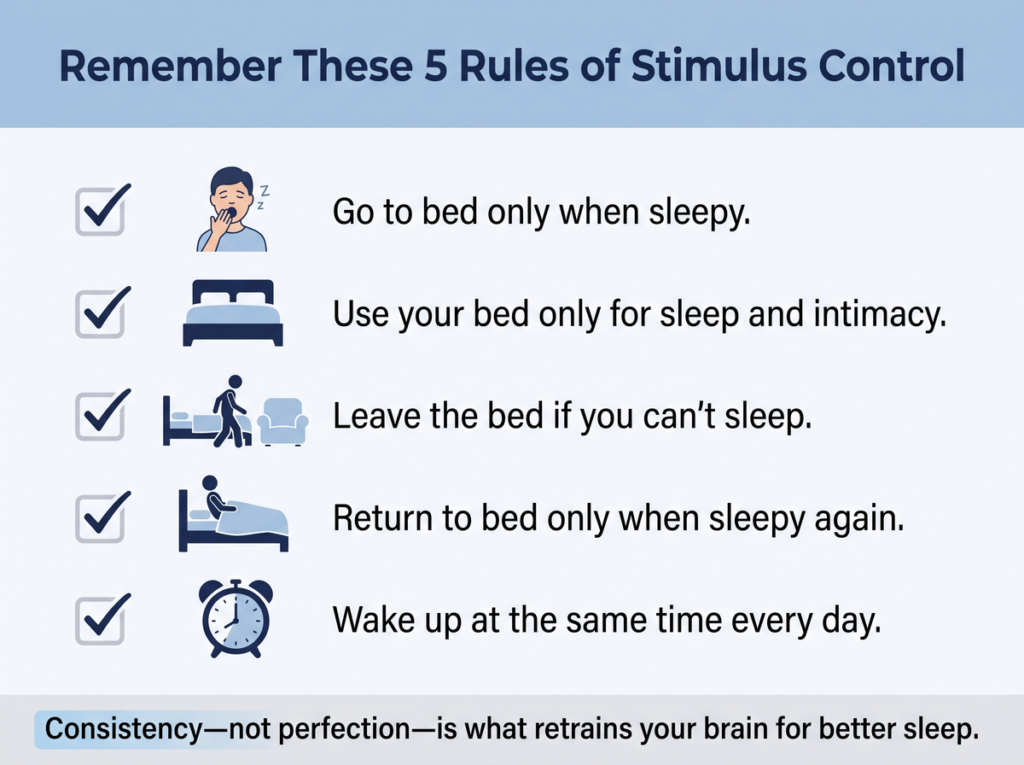
Measure progress by looking at your sleep efficiency—the percentage of time you spend asleep while in bed—rather than focusing on every minute you were awake. A practical stimulus control therapy overview can help reinforce these core principles. Most importantly, give the process time to work. Applying these habits consistently, even after difficult nights, helps rebuild your brain’s association between your bed and sleep.
Leaving the bed is not a test of willpower. It is how you stop teaching your brain that bed is where the long, worried wait happens.
Common Mistakes That Can Slow Your Progress
Even small habits can make stimulus control less effective. Watch for these common mistakes as you build a healthier relationship between your bed and sleep:
- Going to bed because it’s “bedtime” instead of because you’re sleepy.
- Watching the clock to see how long you’ve been awake.
- Using your phone, tablet, or television after getting out of bed.
- Staying in bed hoping sleep will eventually come.
- Sleeping in after a difficult night.
- Taking long daytime naps to catch up on lost sleep.
- Giving up after only a few nights. It often takes consistent practice before your brain begins forming a stronger association between your bed and sleep.
Why Getting Out of Bed Can Help You Fall Back Asleep
Waking up briefly during the night is a normal part of sleep. Most people experience short awakenings between sleep cycles and drift back to sleep without even remembering them. The problem isn’t waking up—it’s when a brief awakening turns into prolonged clock-watching, frustration, and mental effort.
That’s why the stimulus control approach recommends getting out of bed when you’re awake for too long. Staying in bed while your mind races through tomorrow’s schedule, calculates how much sleep you’re losing, or searches for the perfect sleeping position can reinforce conditioned arousal. Over time, your brain begins to associate your bed with being awake instead of asleep.
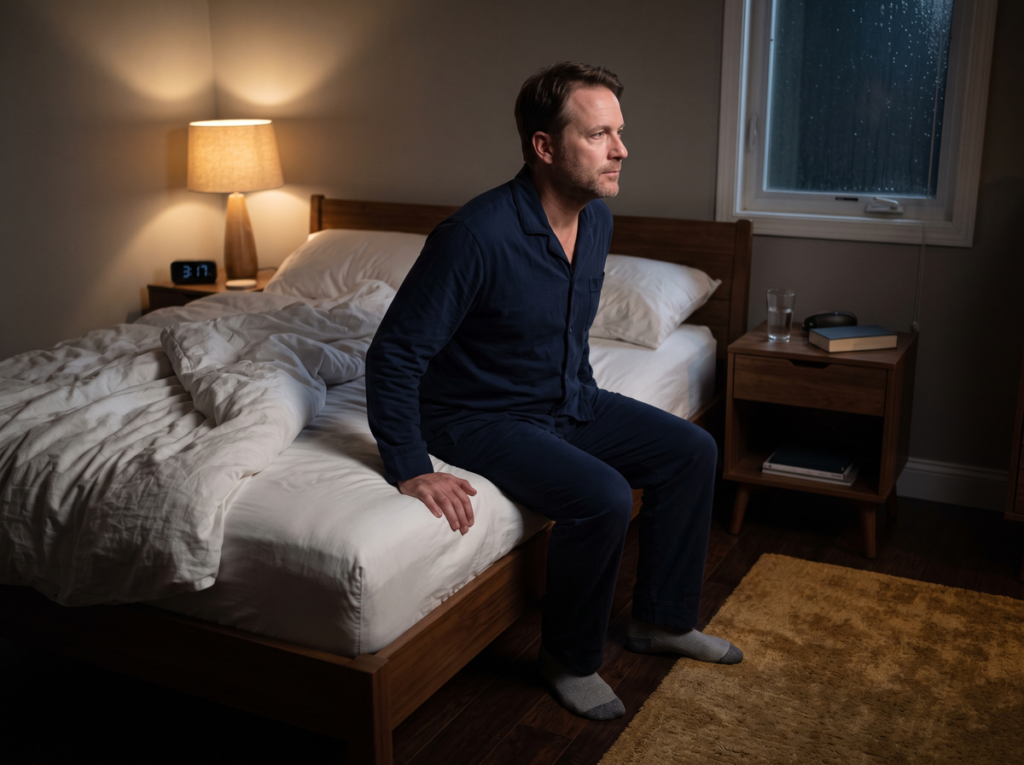
Before bedtime, have a simple plan for what you’ll do if you can’t fall back asleep. A comfortable chair in another room is ideal, but a quiet corner away from your bed can also work. Keep the lights dim and choose something calm and pleasantly boring, such as reading a paper book or listening to relaxing audio. The goal isn’t to stay busy—it’s to remain relaxed until sleepiness returns.
Avoid bright screens, work, household chores, online shopping, or emotionally charged conversations. These activities stimulate your brain when you’re trying to help it settle down. If you’re following a clinician-prescribed sleep window, continue following those instructions. And if hunger is keeping you awake, a light snack may be more helpful than lying in bed feeling uncomfortable.
When you begin to feel sleepy again, return to bed. If you become fully awake once more, simply repeat the process. It may feel inconvenient at first, but each repetition helps strengthen the connection between your bed and sleep rather than wakefulness.
What to Expect During the First Few Weeks
The first few days of stimulus control for insomnia can be the most challenging. If you’ve spent months or years associating your bed with wakefulness, your brain won’t change that pattern overnight. Getting out of bed when you can’t sleep may feel inconvenient at first, and you may wonder whether the approach is really working. Those reactions are completely normal.
It can also be tempting to sleep in or take long daytime naps after a difficult night. While understandable, those habits can reduce your natural sleep pressure and make it harder to fall asleep the following evening. Good sleep hygiene and a consistent bedtime routine can support your progress, but a regular wake time is one of the most important habits to maintain.
There’s no fixed timeline for improvement. Some people notice they spend less time awake in bed after several consistent nights, while for others it takes a few weeks before sleep begins to feel more settled. If you’re also following sleep restriction therapy as part of a CBT-I program, continue following your clinician’s prescribed sleep window rather than adjusting it on your own. The goal isn’t perfect sleep overnight—it’s gradually rebuilding a stronger pattern of sleeping at night and staying alert during the day.
A simple sleep diary can help you recognize progress that might otherwise go unnoticed. Each morning, record your approximate bedtime, wake time, time spent awake during the night, daytime naps, and how rested you feel. Instead of judging a single difficult night, look for gradual improvements over a week or two.
| If this happens | Try this instead |
|---|---|
| You feel guilty leaving bed | Remind yourself that the chair is part of the treatment, not a setback. |
| You keep checking the time | Turn the clock away and keep your phone out of reach. |
| Your partner is asleep | Prepare a quiet spot, robe, book, and dim light before bed. |
| You are exhausted after a poor night | Keep your morning rise steady, then use extra care with driving and safety-sensitive tasks. |
Sleep often begins improving before it feels perfect. You may still wake up during the night, but spend less time lying awake frustrated or trying to force yourself back to sleep. As you continue following these habits, they become more natural, and your bed gradually becomes a stronger cue for sleep. That’s meaningful progress—even if every night isn’t perfect.
When to Seek Professional Help for Chronic Insomnia
Many people can begin practicing stimulus control on their own, especially if their sleep difficulties are mild or have developed recently. If insomnia has lasted for months, significantly affects your daytime functioning, or isn’t improving with consistent practice, working with a sleep coach or CBT-I clinician can be valuable. They can tailor the approach to your situation, monitor your progress, and determine whether additional CBT-I techniques may help.
Before making major changes to your sleep routine, talk with a healthcare professional if you have bipolar disorder, a seizure disorder, a high risk of falls, or severe mental health symptoms. Sleep loss can worsen some conditions, and getting out of bed repeatedly during the night may not be appropriate for everyone. Likewise, don’t change a clinician-prescribed sleep window or stop taking prescribed sleep medications without medical guidance.
The American Academy of Sleep Medicine recommends cognitive behavioral therapy for insomnia (CBT-I) as a first-line treatment for chronic insomnia. Depending on your needs, a clinician may also recommend cognitive restructuring or digital CBT-I. Its digital CBT-I platforms and characteristics overview can help you compare available programs and better understand the level of clinical support they provide.
The goal isn’t to follow every rule perfectly. It’s to create a safe, consistent routine that helps your brain reconnect your bed with sleep. Over time, those small, repeated actions can lead to meaningful and lasting improvements in your sleep.
Frequently Asked Questions
What is stimulus control therapy for insomnia?
Stimulus control therapy is a behavioral technique that helps reconnect the bed with sleepiness and sleep. It involves using the bed for sleep and intimacy, leaving when you are awake for too long, and returning when you feel drowsy again.
Does stimulus control therapy work?
Research shows that stimulus control therapy is one of the most effective behavioral treatments for chronic insomnia and is considered a core component of Cognitive Behavioral Therapy for Insomnia (CBT-I). Consistent practice is important, and many people notice gradual improvements over several weeks.
How long should I stay awake before getting out of bed?
Get out of bed after roughly 15 to 20 minutes if you are still awake, restless, or frustrated. Do not treat this as a demand to watch the clock; your growing alertness is the cue to leave.
What should I do when I get out of bed?
Move to a quiet, comfortable place with dim light and choose a low-stimulation activity, such as reading something neutral or listening to calm audio. Return to bed when sleepiness returns, and repeat the process if you become alert again.
Can stimulus control therapy help with middle-of-the-night waking?
Yes. Leaving bed during prolonged wakefulness can prevent the bed from becoming associated with clock-watching, worry, and mental effort. Brief awakenings are normal, but stimulus control can help keep them from turning into long periods of frustration.
When should I seek professional help?
Consider working with a healthcare professional or CBT-I clinician when insomnia is chronic, severe, or not improving with consistent practice. Seek guidance before making major sleep changes if you have bipolar disorder, seizure disorders, a high fall risk, or severe mental-health symptoms.
Helping Your Bed Become a Place for Sleep Again
Sleep rarely responds well to pressure. Instead of trying to force sleep, stimulus control for insomnia gives your brain a chance to rebuild a healthier association between your bed and sleepiness. That shift takes consistency, not perfection.
Over time, your bed can become less like a place of frustration and more like the familiar cue your body recognizes as a signal for rest. You may still have occasional restless nights, but you’ll spend less time fighting for sleep and more time allowing it to come naturally. That’s the lasting strength of this evidence-based approach.

Stone Evans, Founder of SleepCoaching.com
Stone Evans is the founder of SleepCoaching.com which has become one of the most popular destinations online for people seeking better sleep. Stone started developing this website after realizing his own sleep struggles and then beginning an intensive period of study (which included professional sleep coach training) and ongoing lifestyle changes to improve and optimize his sleep.
Now through in-depth articles from sleep experts around the world, the internet's leading and most comprehensive sleep coaching directory, quantitative sleep product reviews and Stone's personal daily sleep tracking journey, visitors to our website regularly report gaining information and insights that are helping them achieve better health, better sleep and a better quality of life.

