

A sleep diary is one of the most useful tools for understanding insomnia. By recording your sleep habits for one to two weeks, you may begin to notice patterns that are easy to miss from memory alone. The information can also help your health care provider or CBT-I specialist better understand what may be contributing to your sleep difficulties.
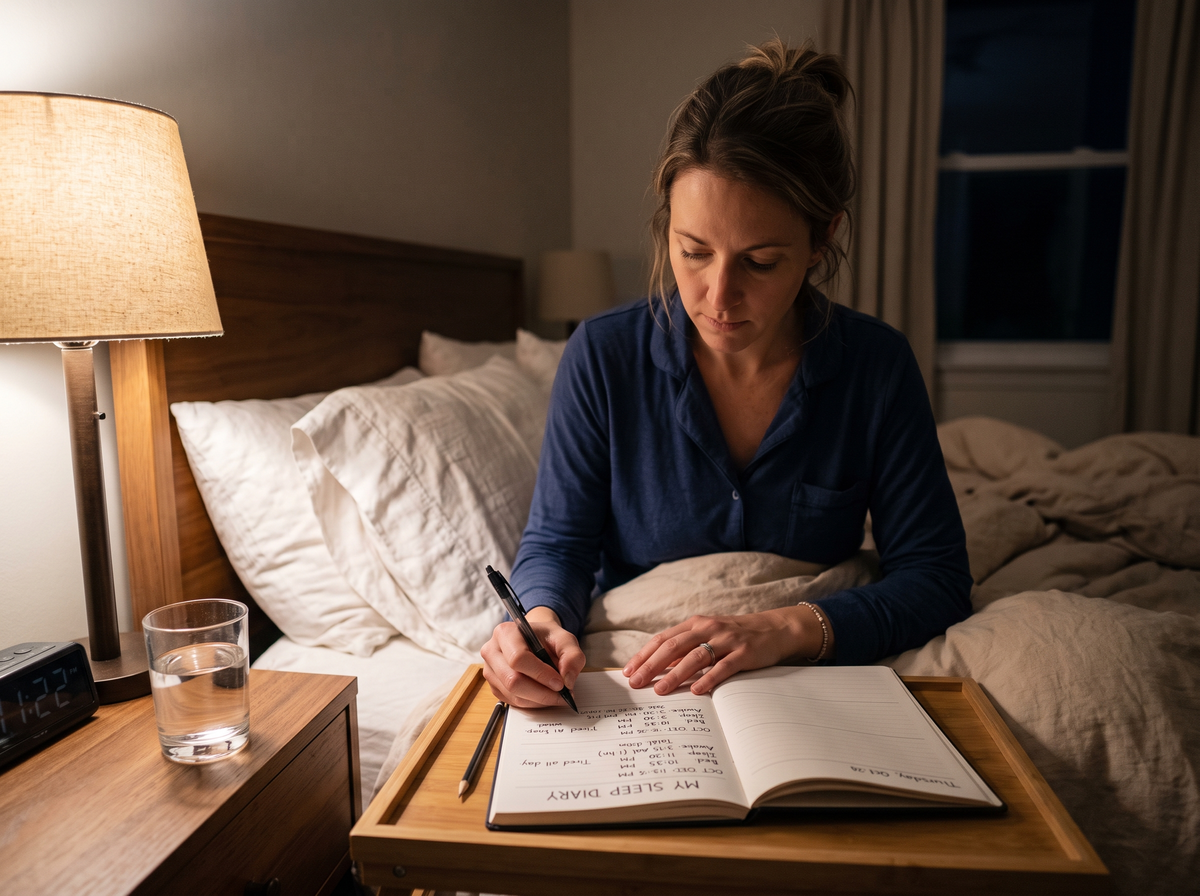
A difficult night can make tomorrow feel difficult too. But memory is not always a reliable historian, especially when you are tired, frustrated, and watching the hours pass.
A brief daily record can clarify a longer-term sleep problem without promising a diagnosis. It gives you something concrete to review and discuss with a health care provider.
A few calm notes each morning can tell a more useful story than a worried guess at the end of the week.
Key Takeaways
- Keep a brief sleep diary for one to two weeks to track sleep timing, nighttime wakefulness, habits, and daytime effects.
- Record your best morning estimates rather than checking the clock or measuring every minute during the night.
- Review several days together for patterns involving caffeine, alcohol, naps, schedules, stress, and time awake in bed.
- A sleep diary can support CBT-I and help a clinician assess sleep concerns, but it cannot diagnose insomnia or replace professional care.
- Take the completed diary to a health care provider if sleep problems continue, affect daily life, or involve safety concerns, severe daytime sleepiness, or possible sleep apnea.
What Is a Sleep Diary?
A sleep diary is a daily record of your bedtime, wake time, how long it takes you to fall asleep, nighttime awakenings, naps, and habits that may affect sleep. Most people keep a sleep diary for one to two weeks to identify patterns, support insomnia evaluation, and guide treatment decisions such as CBT-I.
What a Sleep Diary Can Reveal About Insomnia
A sleep diary is a daily record of your sleep timing, nighttime wakefulness, and habits that may affect rest. Most people keep one for one to two weeks. That is long enough to show recurring patterns, including late nights, long periods awake, or evenings when choices affect rest.
Clinical assessment often includes a sleep history and diary. Together, they show the difference between how sleep feels and the sleep pattern that emerges over several days. A clinical guideline on using a sleep log describes this record as part of a thorough evaluation.
For this condition, the diary may show patterns such as:
- Spending many hours in bed while getting much less actual sleep.
- Taking a long time to fall asleep after a late bedtime, or while scrolling, working, or worrying in bed.
- Having a different sleep schedule on workdays and weekends.
- Remembering a nighttime awakening, or feeling more alert after caffeine, alcohol, or an unusually long nap.
- Rating sleep quality differently from night to night, which can offer useful clues about what supports rest.
A diary is not a test you pass or fail. It is a record of ordinary life, including the less-than-perfect nights.
One difficult entry is only one entry. The helpful information usually appears when you look at several days together.
Choose a Sleep Diary Format That Works for You
Select a format that fits your sleep habits and daily routine. A paper notebook or printable sleep diary works well if you prefer writing by hand. A simple phone note, calendar entry, or spreadsheet can also work. Keep it easy to reach, but do not turn it into another screen-based bedtime task that keeps you awake.

Complete most of the entry after you get up for the day. If you wake briefly at night, do not start calculating sleep minutes or checking your phone. Make a rough note in the morning instead.
Clock-watching often increases pressure and alertness, which can worsen insomnia. Turn the clock face away, move your phone out of reach, and record your best estimate later.
Record These Details Each Day
You do not need a complicated form. Start with the details below, using the same format every day.
- Write down when you got into bed, when you tried to sleep, and when you got out of bed for the day.
- Estimate how long it took to fall asleep. A range is fine, such as “about 30 minutes.”
- Note how many times you remember waking and the estimated total time awake overnight.
- Rate sleep quality in a simple way, such as poor, fair, good, or restful.
- Include a nap, with its approximate start time and length.
- Record caffeine and alcohol use, along with nicotine, cannabis, medication, and sleep aids. Note timing as well as amount when you can.
- Add exercise, illness, travel, pain, unusual stress, and a late meal if they may have affected the night.
Keep notes brief. “Coffee at 3 p.m., nap for 45 minutes, awake twice” is enough. You are building a dependable picture, not writing a nightly essay.
If you use a smartwatch or sleep app, keep sleep tracking data secondary. Consumer devices can be interesting, but they cannot reliably tell you whether you were awake for every minute. Your own estimates, how you felt, and your routine are still useful details for this record.
How to Start Your Sleep Diary Tomorrow Morning
Getting started is easier than many people expect. You do not need a special notebook or app—just a simple, consistent routine.
- Choose a notebook, printable diary, or simple notes app that you’ll use every morning.
- Keep it beside your bed, but avoid checking it during the night.
- Turn your clock away so you are not tempted to watch the time if you wake up.
- Complete your entry after getting up for the day using your best estimates rather than exact times.
- Keep recording for at least one to two weeks before looking for patterns.
Use Estimates, Not a Nightly Audit
People dealing with persistent sleep trouble often remember being awake longer than they were. That experience is real, but you don’t need to measure every minute. Repeatedly checking the time can turn a normal awakening into an anxious calculation.
Use broad estimates: 10 minutes, 30 minutes, an hour, or “not sure.” If you had a nighttime awakening, estimate the total wake time rather than measuring each minute. The goal is consistency when you track sleep, not exact precision.
If checking the time makes your body tense, leave the clock face out of reach. A morning estimate is more helpful than a night spent measuring.
A digital diary can make this easier. Set one morning reminder to record your wake time after you get up. Use a basic template with the same questions for your sleep diary entries each day. Avoid apps that send late-night notifications or invite you to review sleep scores before you are ready for the day.
Try to record how you functioned as well. Note daytime sleepiness, concentration problems, irritability, or a need for extra stimulants. These details help separate a short night that felt manageable from a pattern affecting work, driving, relationships, or health.
Read Your Sleep Pattern Without Overthinking It
After seven days, review your sleep diary in daylight, not after a frustrating night. Look at the whole week before drawing conclusions. Then continue until you have at least 14 days if possible.

These are common patterns to look for:
| Pattern in the diary | A useful question to ask |
|---|---|
| Bedtime changes by several hours | Is your sleep schedule different on weekends or after social plans? |
| Long time awake before sleep | Are you going to bed before you feel sleepy, or using the bed for work and scrolling? |
| Early waking after drinking | Does alcohol use help you feel sleepy but leave sleep lighter later on? |
| Late caffeine and restless sleep | Is it arriving too late in your day, even if it does not feel stimulating at first? |
| Long or late nap | Is it reducing your sleep drive at night? |
| Sleep times shift later each day | Could your circadian rhythm be out of step with the wake time you need? |
You can also estimate sleep efficiency, which is total time asleep divided by time in bed. For example, if you were in bed for eight hours and slept about six, your estimated sleep efficiency is 75 percent. This number can be useful in treatment, but it is not a grade. Do not chase a percentage or make major changes based on a few nights.
Look for repeated links in your sleep habits instead. Perhaps your better nights follow morning daylight and a consistent daily routine. Maybe sleep gets harder after late exercise, an evening energy drink, or a Sunday lie-in. A diary helps you notice possibilities that are easy to miss when every tired morning feels the same.
How CBT-I and Circadian Rhythm Concerns Use Diary Data
Cognitive behavioral therapy for insomnia, often called CBT-I, is a structured treatment that addresses sleep behavior and the thoughts that can keep poor sleep going. A CBT-I primer describes treatment components for trouble falling asleep and staying asleep.
In CBT-I, a clinician may use your sleep diary to set a consistent morning rising time. They may adjust your time in bed and bedtime, building stronger links between bed and sleep. They may also help you respond differently to a wakeful night. These changes should be personalized, especially if you have bipolar disorder, seizures, pregnancy, chronic pain, or another health concern.
Your record can also point to a possible timing issue or sleep disorder. If you regularly cannot fall asleep until very late and struggle to wake for work or school, your body clock may be delayed. If shifts, travel, or irregular work hours are involved, the pattern may need a different approach.
When you meet with a clinician, bring your complete set of sleep diary entries. The calendar context matters as much as any single number.
When to Take Your Sleep Diary to a Professional
This record supports self-observation. It cannot diagnose insomnia or replace professional care. Bring it to a health care provider, therapist, or sleep center if the sleep problem continues for several weeks, affects daily life, or has no clear explanation.
Seek medical advice sooner if you have severe daytime sleepiness, fall asleep while driving, have safety concerns at work, or suspect sleep apnea. Loud snoring, gasping, witnessed breathing pauses, and waking with choking sensations all need medical attention.
Medication changes should also be discussed with the prescriber. A diary can show a possible timing pattern, but it cannot tell you whether a medicine is safe to stop, start, or change. The American Academy of Sleep Medicine’s practice guidelines can help explain why a full assessment matters for a sleep disorder.
Frequently Asked Questions
How long should I keep a sleep diary?
Most people keep a sleep diary for one to two weeks. Seven days may show initial patterns, but 14 days can provide a clearer picture of your usual sleep.
What should I record in a sleep diary?
Record your bedtime, estimated time to fall asleep, awakenings, wake time, sleep quality, naps, and substances or activities that may affect sleep. Keep the notes brief and use the same format each day.
Should I check the clock when I wake up at night?
It is usually better to avoid checking the clock repeatedly because clock-watching can increase alertness and worry. Estimate your total time awake in the morning instead.
Can a sleep diary diagnose insomnia?
No. A sleep diary can reveal patterns and give a health care provider useful context, but it cannot diagnose insomnia or another sleep disorder.
When should I share my sleep diary with a professional?
Share it if sleep problems continue for several weeks, affect daily life, or have no clear explanation. Seek advice sooner for severe daytime sleepiness, falling asleep while driving, loud snoring, gasping, or witnessed breathing pauses.
A Clearer Picture, One Morning at a Time
A sleep diary turns vague, exhausting nights into a practical record of timing, habits, and daytime effects. It does not need to be perfect to be useful.
Sleep problems can feel unpredictable when you’re living through them, but patterns often become clearer when you write them down. Give yourself one to two weeks of brief, honest notes. A sleep diary won’t diagnose insomnia, but it can provide valuable insight into your sleep habits and help guide your next steps. Sometimes the simple act of observing your sleep is the first step toward improving it.

Stone Evans, Founder of SleepCoaching.com
Stone Evans is the founder of SleepCoaching.com which has become one of the most popular destinations online for people seeking better sleep. Stone started developing this website after realizing his own sleep struggles and then beginning an intensive period of study (which included professional sleep coach training) and ongoing lifestyle changes to improve and optimize his sleep.
Now through in-depth articles from sleep experts around the world, the internet's leading and most comprehensive sleep coaching directory, quantitative sleep product reviews and Stone's personal daily sleep tracking journey, visitors to our website regularly report gaining information and insights that are helping them achieve better health, better sleep and a better quality of life.

