

The room is dark, the house is still, and you are awake again. Recurring nighttime awakenings can disrupt your natural sleep cycles and make waking up at 3 AM feel oddly specific, especially when it happens night after night and leaves you staring at the ceiling.
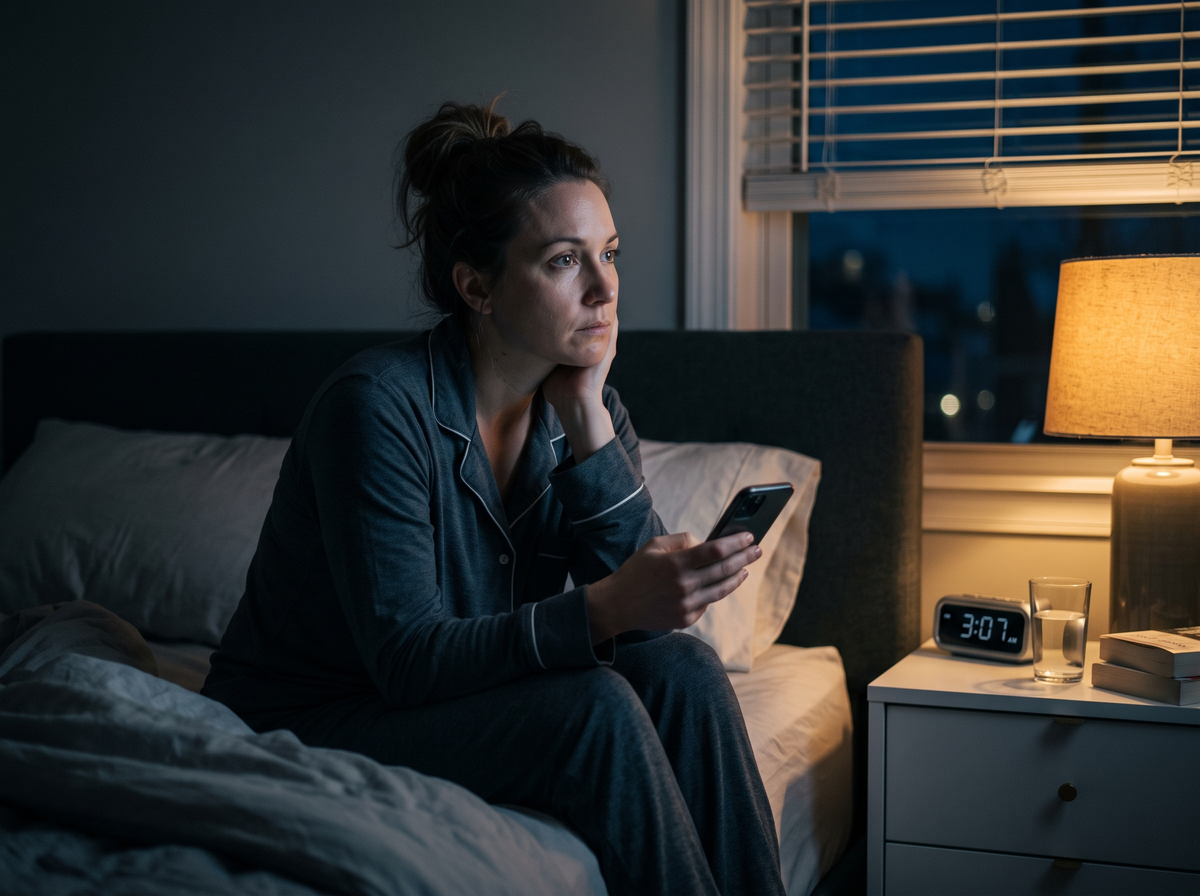
A single wake-up is common and usually harmless. When you experience frequent nighttime awakenings, however, it can point to interrupted sleep cycles or early insomnia symptoms that need attention. The concern is the pattern: you check the clock, your mind switches on, and falling back asleep starts to feel harder than sleep itself. Understanding what may be behind waking up at 3 AM can help you respond with less frustration.
Key Takeaways
- Waking up at 3 AM is frequently a normal part of sleep cycles, though regular awakenings can sometimes point to underlying sleep disorders or chronic stress.
- Physiological factors like rising cortisol levels, blood sugar drops, caffeine intake, and alcohol consumption often trigger middle-of-the-night alertness.
- Improving your bedroom environment by keeping it dark, cool, and quiet helps prevent environmental disturbances from waking you fully.
- Avoiding clock-checking, refining your evening routine, and managing stress and anxiety through relaxation techniques can stop waking up at 3 AM from turning into prolonged insomnia symptoms.
Why Waking Up at 3 AM Feels So Common
Sleep does not move in one long, unbroken line. It comes in repeating sleep cycles that include light sleep, deep sleep, and REM sleep. Brief nighttime awakenings often happen between those sleep cycles, even if you do not remember them.
By the early morning hours, shifts in your sleep architecture cause natural transitions between deep sleep and REM sleep. As you cycle back and forth, your body is more sensitive to noises, physical discomfort, wandering thoughts, or a warm bedroom that can wake you fully. As part of your circadian rhythm, cortisol levels begin to rise during this part of the night, making nighttime awakenings more noticeable. A Texas Health explanation of early-morning wake-ups also notes that your circadian rhythm and cortisol levels begin their natural rise during this part of the night.
Cortisol is often called the stress hormone, but it is not automatically bad. Your body needs it to help regulate energy and prepare for morning. The problem is that stress, worry, or an irregular sleep schedule can make you more sensitive to normal changes in cortisol levels and your broader sleep architecture. Furthermore, underlying hormonal changes can influence these patterns, making sleep disturbances more frequent during certain phases of life.
The clock can also create a strong mental association. Once you have spent several nights waking up at 3 AM, your brain may start expecting that disruption within your normal sleep cycles. You notice the time immediately, then begin calculating how few hours remain before morning while your cortisol levels continue their upward trend.
A brief wake-up is normal. The struggle often begins when checking the clock turns it into a problem to solve.
That is why consistently waking up at 3 AM does not always point to one clear cause. It can be a mix of sleep biology, habits, your environment, and what is happening in your life.
Stress and a Busy Mind Can Interrupt Sleep
Stress is one of the most familiar reasons people find themselves awake in the middle of the night. During the day, there are meetings, errands, family needs, and screens to hold your attention. At 3 AM, there is less distraction.
A thought that felt manageable at 4 PM can feel urgent in the dark. Your brain may begin reviewing conversations, planning tomorrow, or searching for answers to a problem that cannot be solved before sunrise. This mental chatter is often fueled by stress and anxiety, which interact closely with your body.
Short-term stress can affect sleep after a demanding week, travel, illness, or a major change at home or work. Ongoing stress and anxiety can make the pattern more persistent. This does not mean every middle-of-the-night wake-up is caused by stress and anxiety. It simply means the nervous system and sleep are closely connected.
Elevated cortisol levels and shifting blood sugar drops can also play a major role in frequent nighttime awakenings. When your body experiences these physiological triggers, cortisol levels can spike during the early morning hours, pulling you out of deep sleep and lighter rest stages. At the same time, nighttime awakenings frequently coincide with natural blood sugar drops that signal the adrenal glands to release emergency energy.
Lifestyle habits can amplify these physiological triggers. Alcohol consumption can add to the problem. While a drink may make you feel sleepy at first, alcohol consumption fragments REM sleep later in the night as liver function works to process the toxins, which spikes your cortisol levels and leaves you waking up at 3 AM. Large meals close to bedtime, nicotine, and poorly timed caffeine intake can have a similar effect for some people.
Caffeine has a long half-life, so a late-afternoon coffee may still be active when your head hits the pillow. If you are regularly waking up at 3 AM, consider when you have your final coffee, tea, energy drink, or pre-workout product, as managing your caffeine intake can protect your rest. Prioritizing stress management during the day and establishing a calming evening routine helps lower overall tension before bedtime, reducing the likelihood of waking up at 3 AM.
A simple sleep note can be useful for one or two weeks. Write down your bedtime, wake time, alcohol or caffeine use, exercise, stress level, and overnight wake-ups. You are not looking for perfection. You are looking for patterns that are easy to miss when every night feels the same.
Your Bedroom May Be Waking You
Sometimes the explanation for nighttime awakenings is less dramatic than it feels. Your bedroom environment that gets too warm at night, a partner who moves or snores, a pet climbing on the bed, or a passing truck can wake you during a lighter stage of sleep before you transition into deep sleep.

Light exposure deserves attention, too. Phone notifications, a bright clock face, hallway lighting, and early sunrise can signal morning to the brain before you are ready. Managing light exposure with blackout curtains helps prevent premature waking up at 3 AM. If you wake to use the bathroom, keep the path dim and avoid turning on overhead lights.
Temperature changes can also matter. Body temperature naturally shifts overnight, and bedding that felt comfortable at bedtime may feel heavy or hot. Breathable sheets, lighter layers, or a cooler bedroom environment can make a meaningful difference in reducing nighttime awakenings.
If you are unsure where to start, focus on the basic principles of sleep hygiene:
- Keep the bedroom environment dark, quiet, and comfortably cool by using blackout curtains and adjusting your thermostat.
- Put your phone out of reach and turn off nonessential alerts to limit light exposure.
- Use a fan, white noise machine, or earplugs if household sounds wake you.
- Choose bedding that you can adjust without fully getting out of bed.
Improving your sleep hygiene will not erase every instance of waking up at 3 AM. These changes can reduce the chance that a brief, normal wake-up becomes a long period of alertness.
What to Do When You Wake Up in the Night
The first goal is not to force sleep. Trying hard to sleep often creates tension, especially when you are watching the minutes pass during unexpected nighttime awakenings.
Avoid checking the time if you can. Turn the clock away from the bed, and keep your phone off the nightstand. Time-checking invites mental math: “If I fall asleep now, I will get four hours.” That calculation rarely brings rest.
Instead, try a quiet response. Notice that you are awake, take a few slow breaths, and let your body stay relaxed. Using effective relaxation techniques such as counting breaths, picturing a familiar calm place, or repeating a neutral phrase like “It is okay to rest” can help you manage these frustrating insomnia symptoms.
If you are still awake after what feels like about 20 minutes, get out of bed. Keep the lights low and do something boring and calm, such as reading a few pages of a paper book or listening to gentle audio. Return to bed when you feel sleepy again.
This approach is a cornerstone of proper sleep hygiene that helps protect the bed as a place for sleep rather than worry. It may feel inconvenient at first, but lying awake and dealing with nighttime awakenings while feeling frustrated often strengthens the association between bed and alertness.
Some people reach for their phone because it feels comforting. However, the scrolling, bright light, news, and messages can pull the brain in the opposite direction. A short meditation recording with the screen facedown might be different, but a social-media scroll is rarely restful. Practicing simple relaxation techniques or addressing lingering insomnia symptoms without a screen can make waking up at 3 AM much easier to handle.
Maintaining good sleep hygiene means knowing that waking up at 3 AM does not ruin your entire night, provided you avoid unnecessary light exposure and heavy stimulation. When stress and anxiety tend to flare in the dark, keeping your environment calm helps reset your body for a smoother return to rest.
Daytime Habits That Support More Restful Nights
Better sleep often begins before bedtime. A consistent wake time is one of the most helpful anchors because it helps set your circadian rhythm. Try to keep it fairly steady on weekends, even after a rough night, to protect your internal body clock and prepare your mind for deeper rest during deep sleep cycles.
Morning light is another useful signal. Open the curtains soon after waking, take a short walk outside, or sit near a bright window with your coffee. This intentional light exposure helps regulate your circadian rhythm and supports future melatonin production at night, which can make it easier to fall asleep and stay asleep without waking up. Adequate morning light also helps regulate melatonin production later in the day, reducing the chances of waking up at 3 AM.
Movement can help as well. Regular walking, strength training, yoga, or another activity you enjoy may support sleep quality and lower everyday stress. Intense late-night workouts are fine for some people, but others sleep better when they finish vigorous exercise earlier to protect their REM sleep and overall recovery.
A steady evening routine can make the transition to bed less abrupt, especially if you struggle with waking up at 3 AM. It does not need to be elaborate. Dim the lights, finish work messages, shower, stretch, read, or prepare for tomorrow. Repeating the same few steps gives your mind a gentler landing place through structured stress management. Sticking to a consistent evening routine also helps signal to your body that it is time to wind down.
Good sleep hygiene relies heavily on consistency rather than a perfect bedtime routine. As discussed in Healthline’s article on waking at 3am, sleep is affected by habits, health, stress, and the sleep environment at the same time.
If you use a wearable such as an Oura Ring, treat its sleep data as a clue rather than a verdict. The company’s overview of why people wake at 3am discusses sleep stages and stress, but no consumer tracker can diagnose why you are awake.
When It Is Time to Talk With a Healthcare Professional
Many sleep disruptions improve when stress settles or routines become more consistent. Still, regular waking that leaves you exhausted deserves attention.
Speak with a qualified healthcare provider if sleep disruption persists for weeks, affects your ability to work or drive safely, or causes significant daytime impairment. Your healthcare provider can help if you suspect underlying sleep disorders like sleep apnea, or if you experience loud snoring, gasping or choking during sleep, chest pain, severe mood changes, or frequent morning headaches. Sleep apnea and related sleep disorders should always be evaluated properly by a healthcare provider.
Some health concerns, medications, physical pain, reflux, menopause symptoms, and other hormonal changes can interfere with sleep. These hormonal changes, including those tied to menopause symptoms or persistent physical pain, often disrupt rest. A healthcare provider can also evaluate metabolic or endocrine causes, such as insulin resistance, and assess how blood sugar drops or elevated cortisol levels might affect you. Monitoring cortisol levels and addressing insulin resistance can uncover the root of nighttime waking. Your liver function and overall physiology also play a role, and your healthcare provider can look at the bigger picture instead of guessing from the clock alone.
A certified sleep coach may also offer practical support with routines, sleep habits, and the patterns that keep nighttime wake-ups going. Coaching is not a substitute for medical care when sleep disorders need assessment, but a professional can work with you to build a helpful part of a broader sleep plan.
Frequently Asked Questions
Why do I always wake up specifically at 3 AM?
Waking up at this exact time often coincides with the natural transition between deep sleep and REM sleep when your body experiences rising cortisol levels. If you are dealing with stress and anxiety, late caffeine, or a disrupted circadian rhythm, your brain may form a mental habit of anticipating this disruption.
Should I check the clock or my phone when I wake up?
It is best to avoid checking the time or looking at your phone because it invites stressful mental math and exposes you to bright light. Calculating how many hours of sleep remain only increases anxiety and makes falling back asleep much harder.
What should I do if I cannot fall back asleep after 20 minutes?
If you remain awake and feel frustrated for about 20 minutes, get out of bed and keep the lights dim. Engage in a calming, low-stimulation activity like reading a physical book until you feel naturally sleepy again to protect the association between your bed and rest.
Can lifestyle habits really impact these nighttime awakenings?
Yes, habits like consuming alcohol, eating large meals late at night, or failing to monitor your caffeine intake heavily fragment rest later in the night. Managing these triggers and establishing a consistent morning wake time can significantly improve your overall sleep stability, though persistent disruptions might sometimes indicate underlying sleep disorders or even conditions like sleep apnea that require evaluation by a qualified healthcare provider.
What foods or supplements help prevent waking up at 3 AM?
While no single diet prevents waking up at 3 AM entirely, focusing on balanced meals with complex carbohydrates, healthy fats, and adequate protein can help stabilize blood sugar levels throughout the night. Avoiding heavy meals, high-sugar snacks, and spicy foods close to bedtime also prevents digestive discomfort and subsequent cortisol spikes that often fragment rest. Additionally, limiting alcohol consumption and monitoring your overall caffeine intake can significantly reduce the physiological triggers that lead to middle-of-the-night awakenings.
A Calmer Way to Handle 3 AM Wake-Ups
Waking once in the night is part of normal human sleep. What matters most is how often it happens, how long it lasts, and how you feel the next day.
When you find yourself waking up at 3 AM often, start with the basics: protect your bedroom environment, reduce clock-checking, keep a steady wake time, and give stressful thoughts a place to go before bed. Small, consistent changes can make the early-morning hours feel less charged.
Rest is still rest, even on a night when sleep does not return as quickly as you hoped. By focusing on good sleep hygiene, stress management, and relaxation techniques, you can gradually stabilize your sleep architecture and calm recurring nighttime awakenings over time. This holistic approach helps you reduce the frustration of waking up at 3 AM and puts an end to disruptive nighttime awakenings once and for all.

Stone Evans, Founder of SleepCoaching.com
Stone Evans is the founder of SleepCoaching.com which has become one of the most popular destinations online for people seeking better sleep. Stone started developing this website after realizing his own sleep struggles and then beginning an intensive period of study (which included professional sleep coach training) and ongoing lifestyle changes to improve and optimize his sleep.
Now through in-depth articles from sleep experts around the world, the internet's leading and most comprehensive sleep coaching directory, quantitative sleep product reviews and Stone's personal daily sleep tracking journey, visitors to our website regularly report gaining information and insights that are helping them achieve better health, better sleep and a better quality of life.

